

AURÉA™
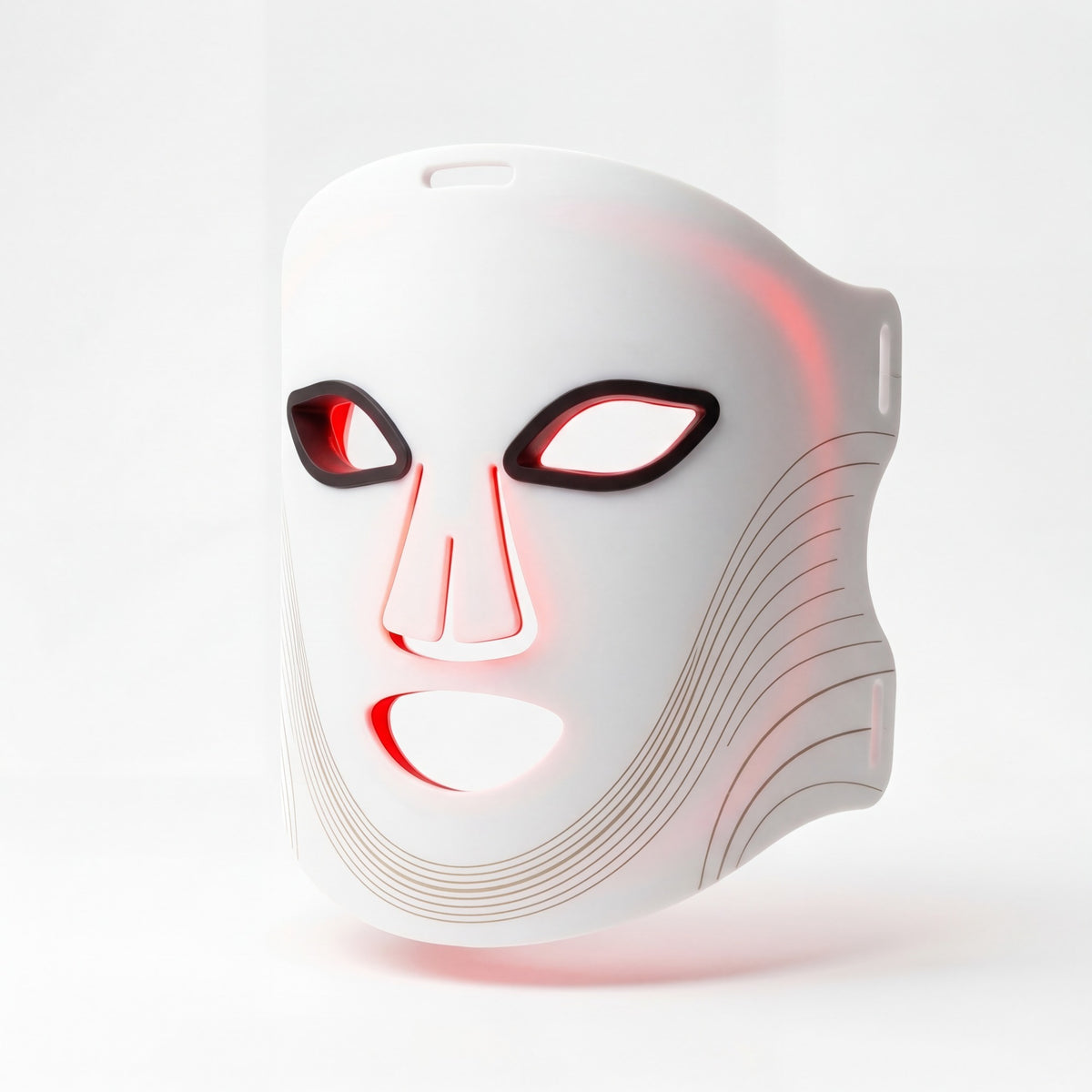
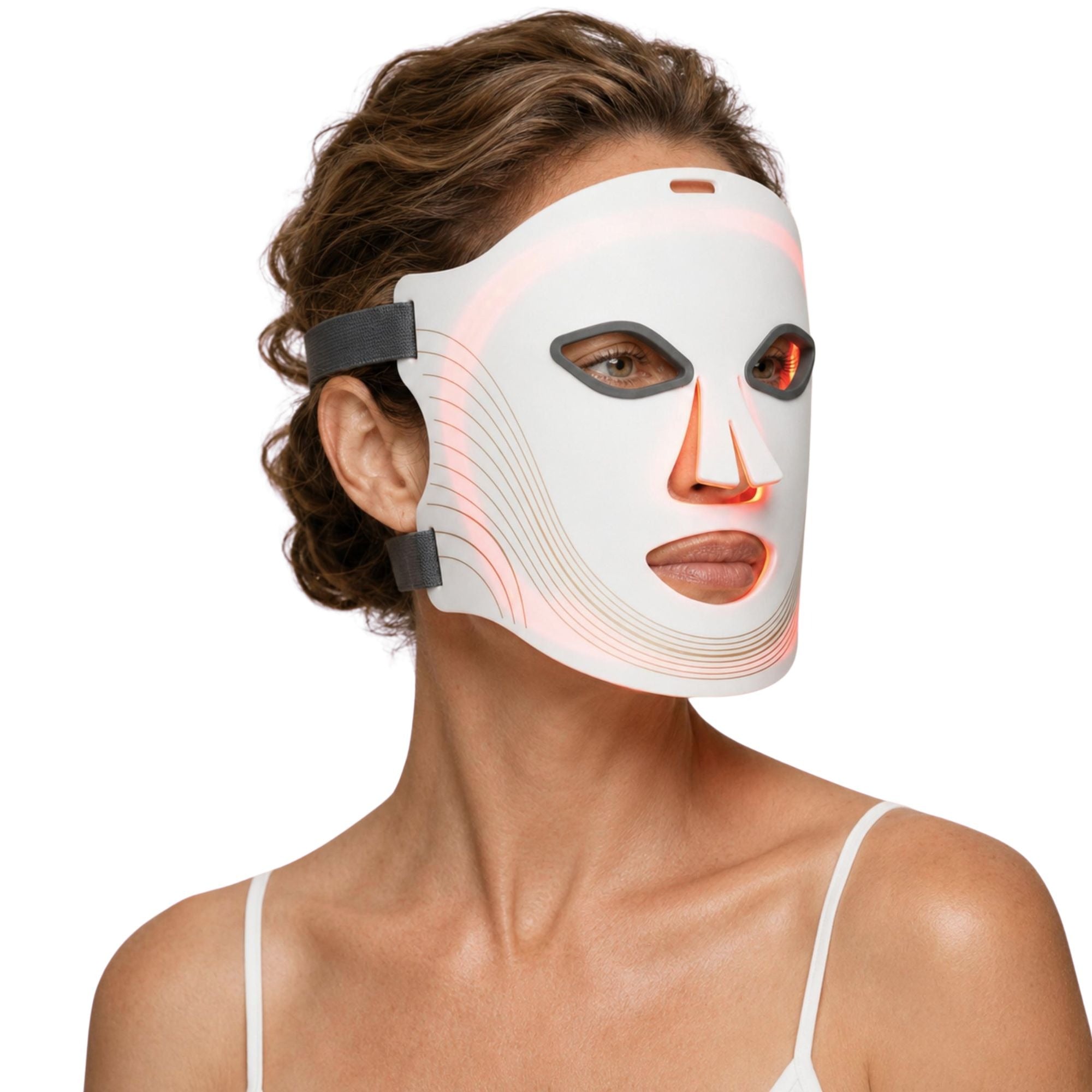
Auréa™ LED Face Mask
Smoother, clearer, more radiant-looking skin: a salon-grade LED facial at home, hands-free in 10 minutes.
Benefits observed
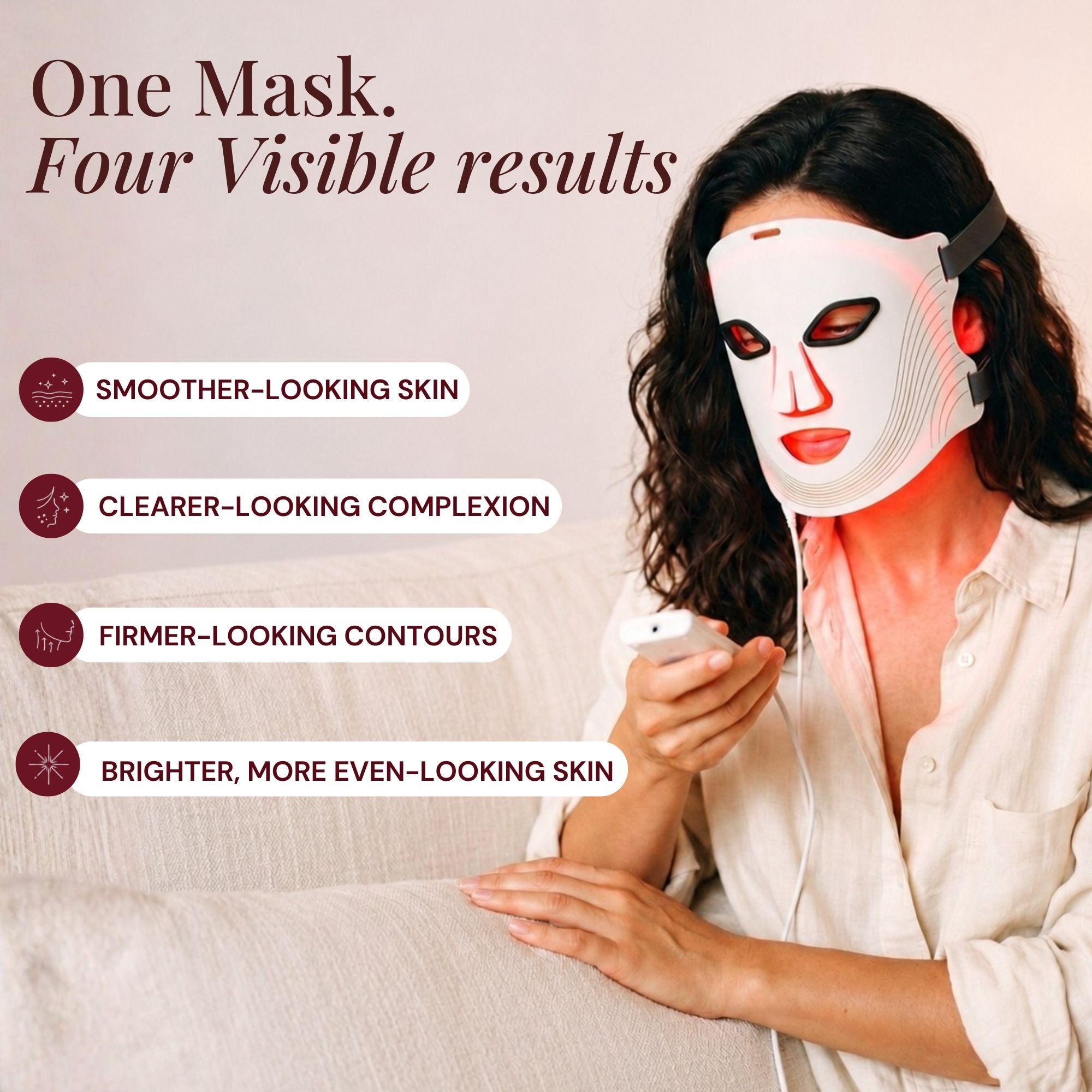
- Wrinkles and fine lines look smoother — the red mode (660 nm) supports a visibly smoother, firmer look.
- Clearer-looking skin — the blue mode helps refresh areas prone to visible blemishes.
- Firmer-looking contour, more even tone — session after session, skin can look more toned and radiant.
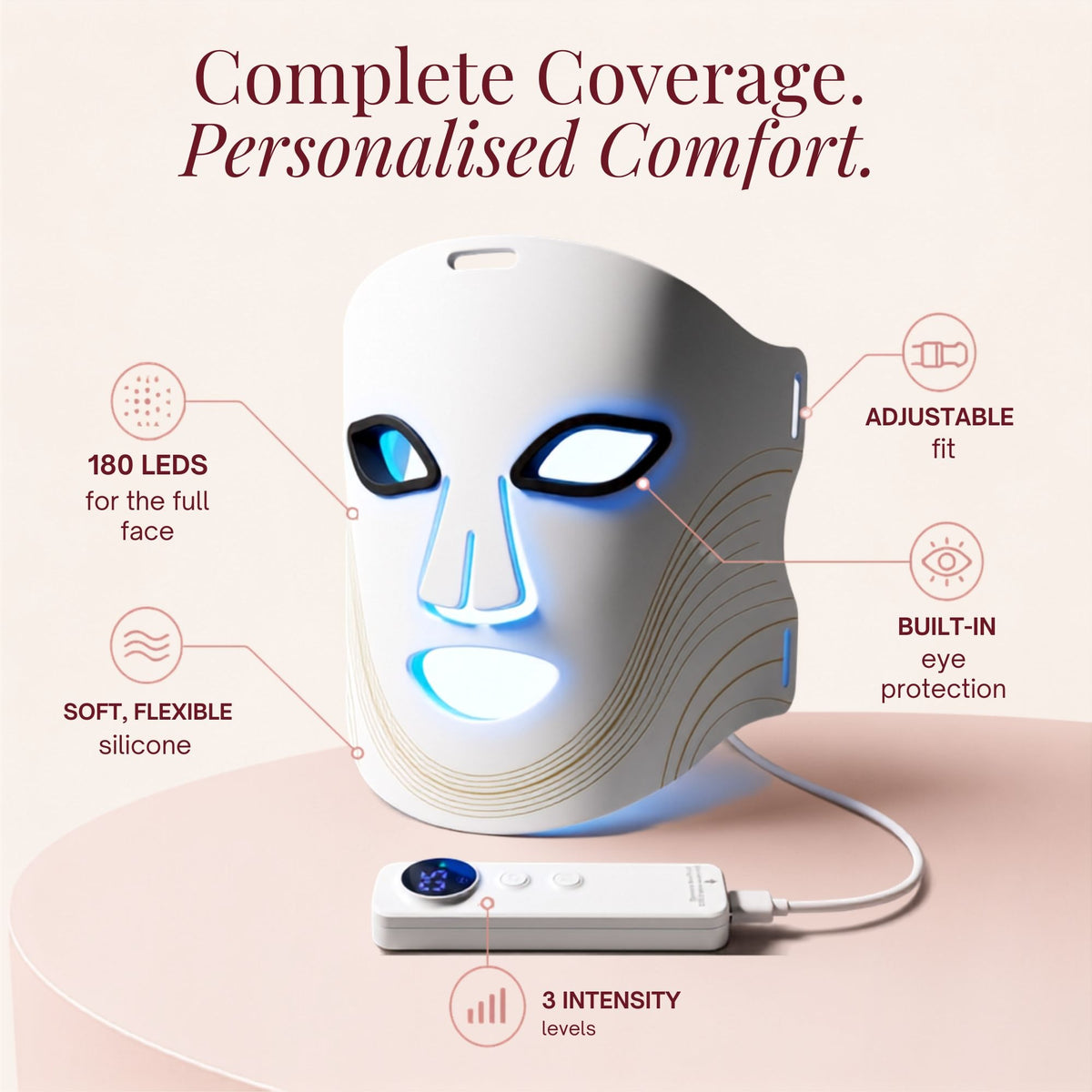
- A simple ritual, no appointment needed — the 180 LEDs cover the whole face in a single 10-minute session, at home.
Usage tips
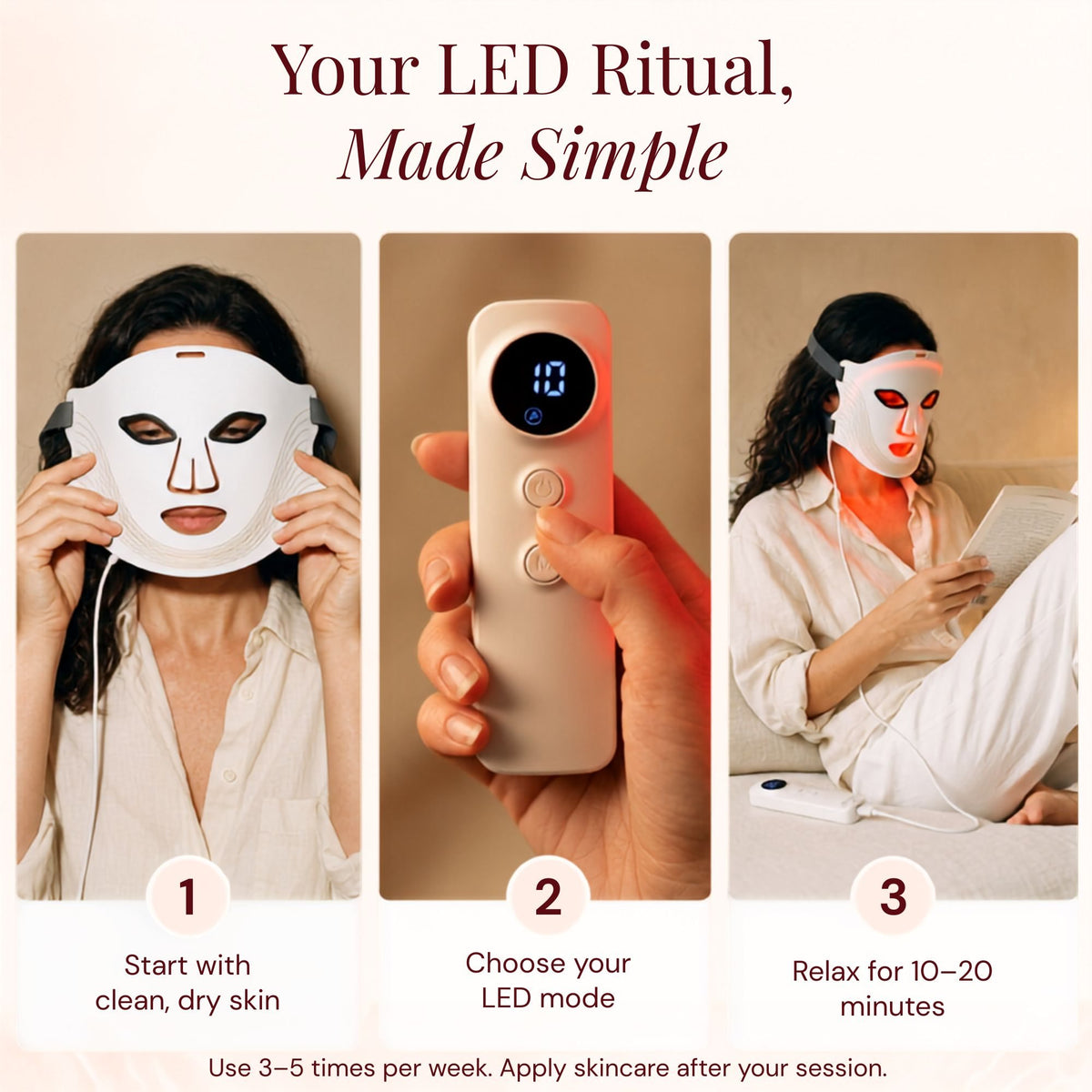
Use for 10 minutes per session, 3 to 5 times a week, on clean, dry skin — without cream or make-up, so the light can reach the skin properly.
Apply your serum or moisturiser after the session, never before.
The 10-minute timer switches off automatically at the end of the session.
Regular use for at least 4 weeks is recommended ; improvement can continue for up to 8 to 12 weeks. Individual results may vary.
Choose options

10-MINUTE SESSION

CE CERTIFIED

RESULTS FROM 4 WEEKS

EFFECTIVE ANTI-AGEING CARE
Real skin. Why choose Auréa™.
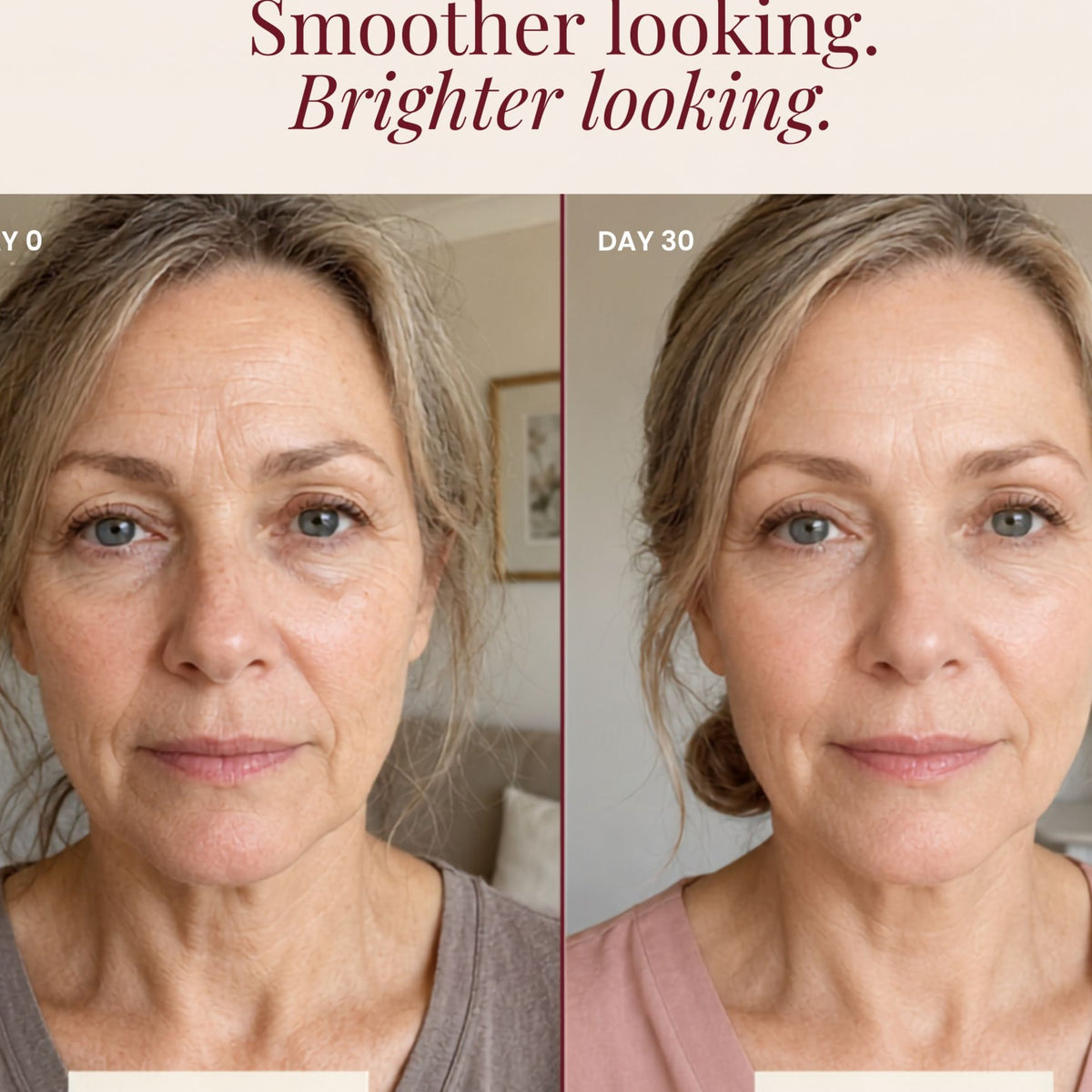
Individual results; regular use 3 to 5 times a week.
 Before
 Week 8
Dark spots, Evenness
'Uneven-looking areas on my cheeks had bothered me for years. After two months of consistent use, they looked noticeably softer, although they had not disappeared.'
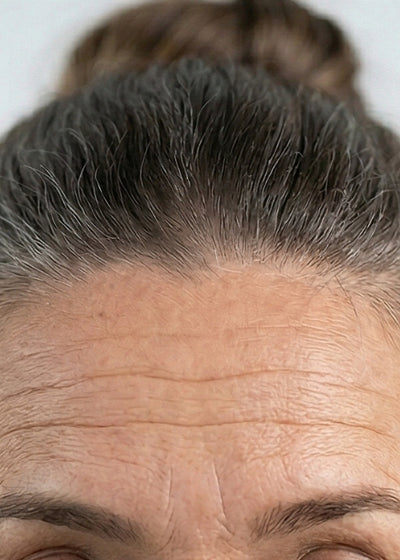 Before
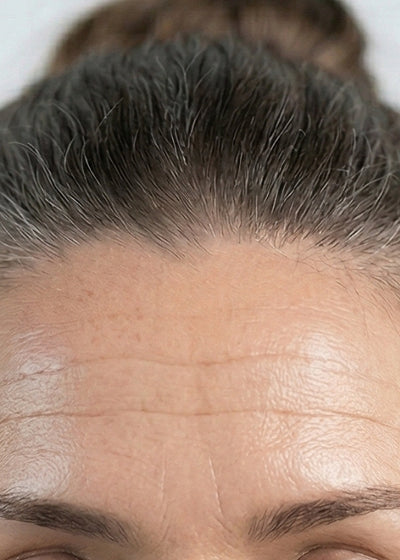 Week 6
Wrinkles, Fine lines
'Honestly, I was sceptical. An LED mask, really? After five to six weeks, my husband was the first to notice that my forehead lines looked softer. I did not expect that.'
 Before
 Week 4
Acne, Blemishes
'My chin is prone to blemishes and excess oil. After a month of regular blue-light sessions, my skin looked clearer and more balanced. Individual results may vary.'
 Before
 Week 8
Dull skin, Radiance
'I use it as part of my morning routine. After four weeks, a colleague asked whether I had changed my foundation. It was the mask.'
VISIBLE FROM 4 WEEKS
4 wavelengths. 4 visible results.
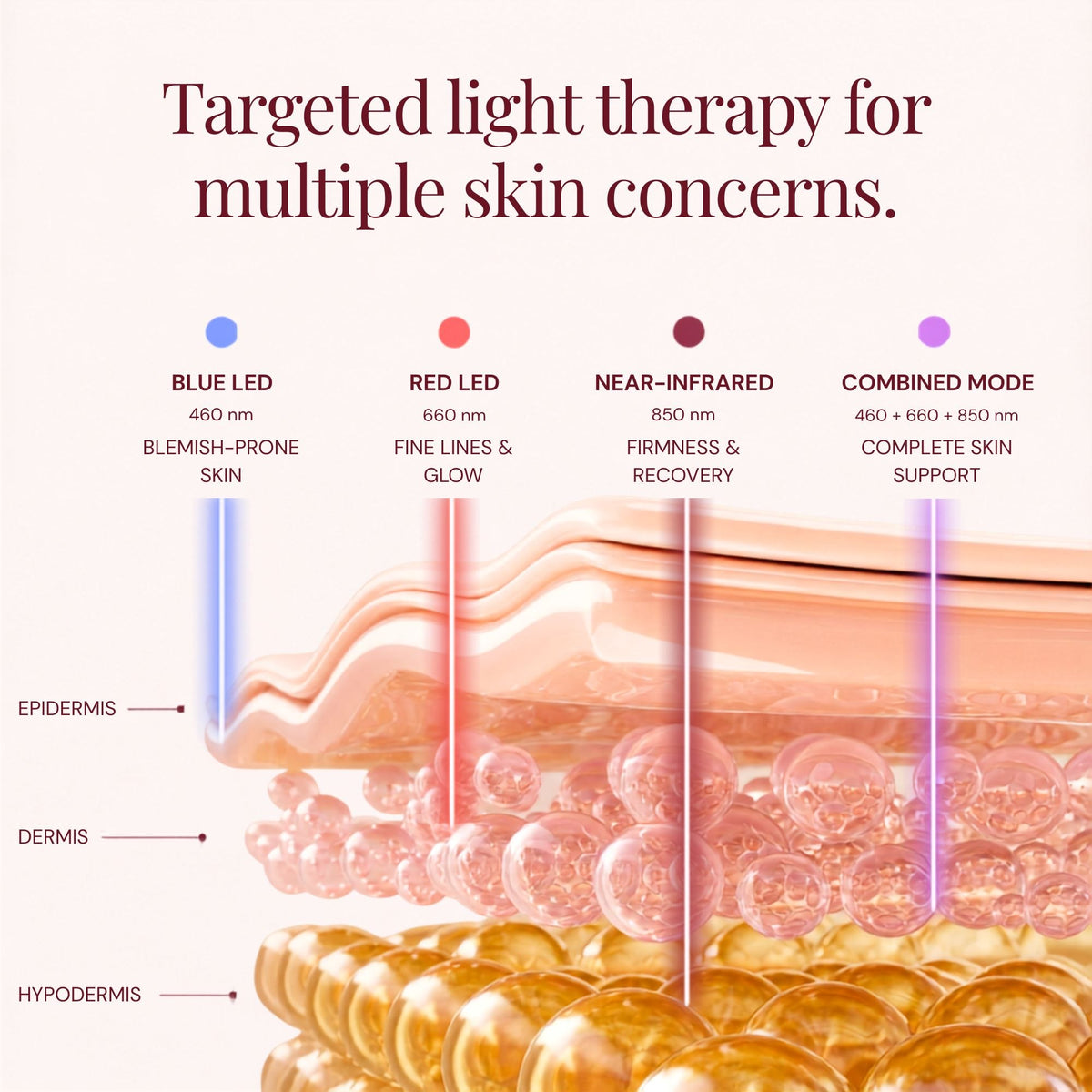
Each wavelength targets a different skin concern. One mask for anti-ageing, blemishes, firmness and radiance.
Smooths the look of wrinkles
Deep red light at 660 nm helps stimulate collagen more deeply than the standard 633nm used by most masks on the market.
Helps purify the skin
Blue LED at 460 nm helps refresh areas prone to visible blemishes and shine. Most competitor masks don't include this wavelength.
Helps firm in depth
Near-infrared at 850 nm penetrates beyond the dermis to help re-tighten and densify sagging skin. An invisible but measurable action from 4 weeks.
Helps awaken radiance
The Violet mode combines all 3 wavelengths simultaneously for an all-round treatment. An exclusive feature that 2-wavelength masks can't offer.
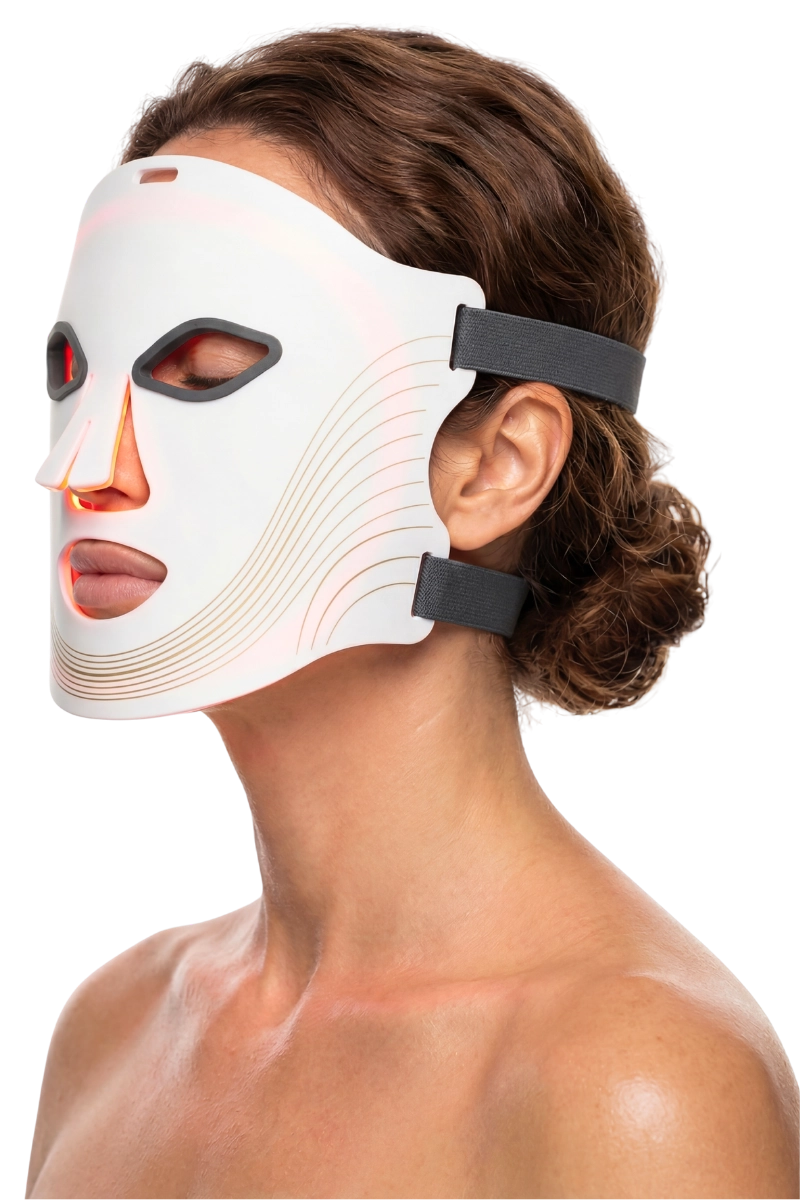
A 3-Step Routine


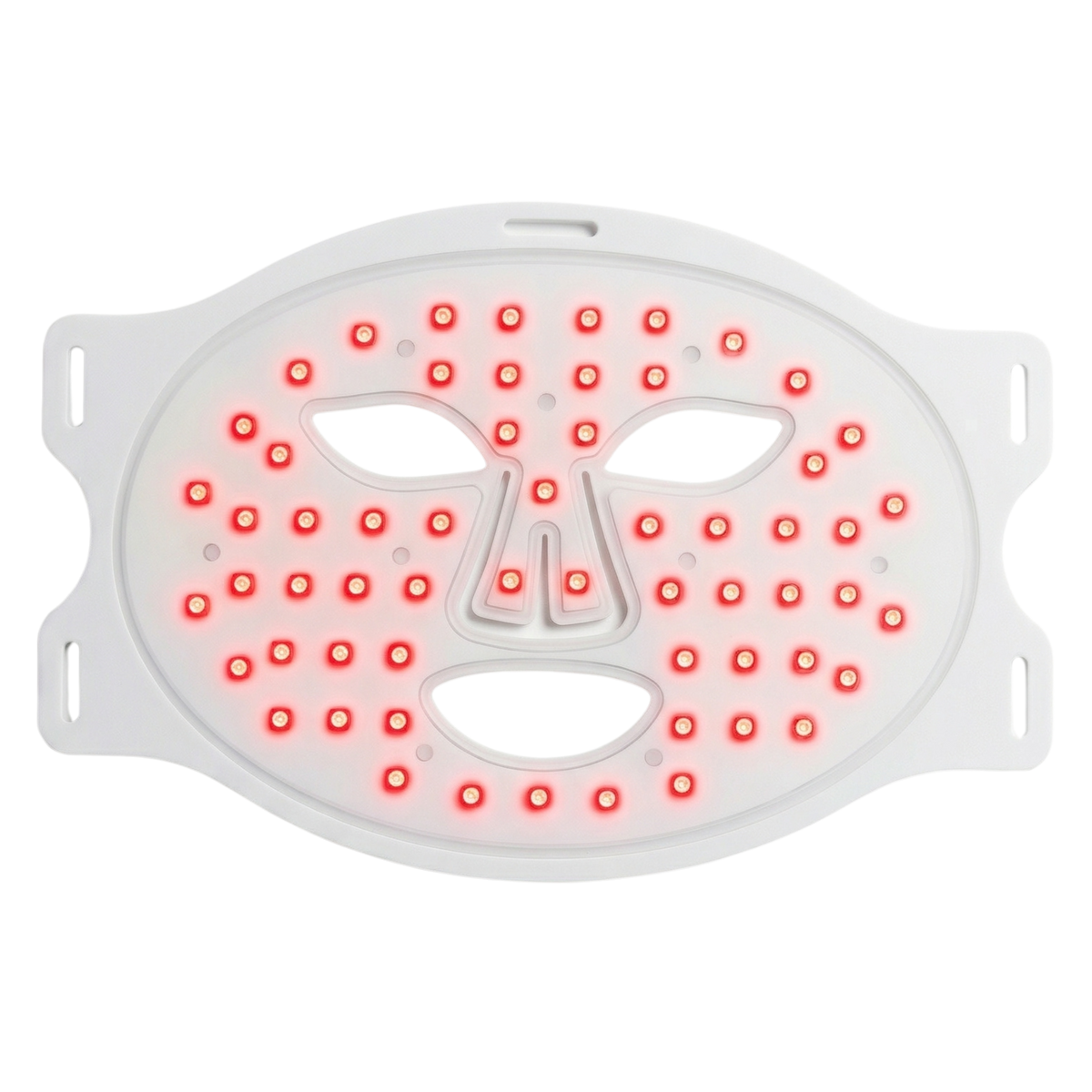
Every light, a targeted treatment
No settings needed: put it on, switch it on, enjoy.
Validated by research
What the science shows
Results supported by independent studies
Participants using an at-home LED mask (630 + 850 nm) showed a visible improvement in wrinkles after 16 weeks.
LED light at 660 nm increases type I procollagen synthesis by 31%, the key protein for skin firmness. This finding relates to the LED light technology studied, not to this specific product.
Photobiomodulation is one of the most extensively documented technologies in aesthetic dermatology.
Participants using an at-home LED mask (630 + 850 nm) showed a visible improvement in wrinkles after 16 weeks.
LED light at 660 nm increases type I procollagen synthesis by 31%, the key protein for skin firmness. This finding relates to the LED light technology studied, not to this specific product.
Photobiomodulation is one of the most extensively documented technologies in aesthetic dermatology.
"LED phototherapy at 630 nm and infrared at 850 nm are effective, safe, well-tolerated and painless treatments for skin rejuvenation."
Medicine (Baltimore) — Randomised, double-blind, controlled clinical trial — Park et al., 2025
Your skin, week after week
The Auréa™ LED face mask works progressively. Each session stimulates your skin in depth, and results build up over the weeks.

10 minutes per session, 3 to 5 times a week. Individual results may vary.
Not all LED masks are built the same.
See what's inside Auréa before you choose.
CUSTOMER REVIEWS
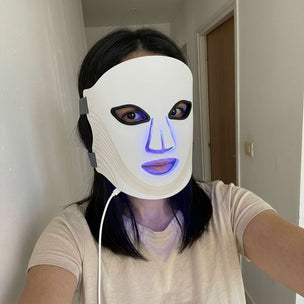
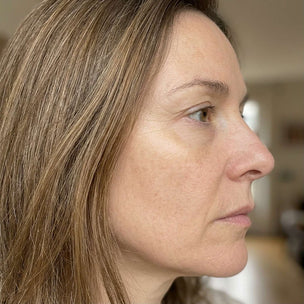
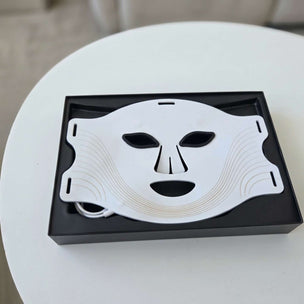
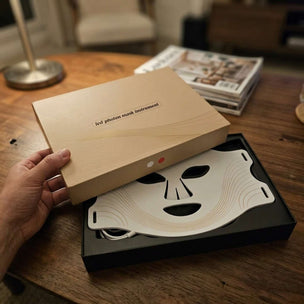
Loved in real routines.
Questions before you decide?
Straight answers on comfort, fit, frequency, cleaning and safety.
The mask is covered by a 1-year manufacturer's warranty and Syracare's 30-day satisfaction guarantee. If the product isn't right for you, you'll be refunded.
Yes. Photobiomodulation is documented in more than 5,000 studies on PubMed. A meta-analysis published in JAMA Dermatology in 2025 (Harvard/Brigham and Women's Hospital) confirms the effectiveness of at-home LED devices on acne lesions. A randomised, double-blind clinical trial published in Medicine in 2025 showed a visible improvement in wrinkles in 86% of participants using an at-home LED mask (630 + 850 nm). These findings relate to the LED light therapy technology studied, not to this specific product.
No. The device is 100% painless. LED light therapy is non-thermal and non-invasive. You won't feel any heat or tingling. Most users use their session as a moment to relax.
Each mode targets a different concern. Red (660 nm) helps stimulate collagen to reduce the appearance of wrinkles and fine lines. Blue (460 nm) helps refresh areas prone to visible blemishes and shine. Infrared (660 nm + 850 nm) penetrates deeply to help firm the skin. Violet (660 nm + 460 nm + 850 nm) combines all 3 wavelengths for an all-round treatment. You choose the mode that suits your needs at the time.
Irradiance (mW/cm²) measures the light power delivered to your skin. It's the factor that determines whether the light actually reaches the dermis or stays on the surface. Our mask delivers 45 mW/cm², around 9 times more than entry-level masks. Without sufficient irradiance, even 1,000 LEDs would have no effect.
3 to 5 sessions a week, 10 minutes per session, on clean, dry skin. The device switches off automatically at the end of the session. For best results, follow a cycle of 4 consecutive weeks.
Use the mask on clean, dry skin, without cream or make-up — the light needs to reach the skin without a barrier. After the session, apply your usual serum and moisturiser. Light therapy can help the skin's receptivity to active ingredients, making it the ideal moment for your routine.
The first results are typically visible from 4 weeks of regular use: a brighter complexion, smoother-looking skin. Improvement can continue for up to 8–12 weeks for structural results (wrinkles, firmness). Results vary from person to person and depend on regular use.
The 660 nm wavelength (deep red) penetrates deeper into the dermis than the standard 633nm used by most masks on the market. This 27nm difference helps it reach the deeper layers involved in skin firmness. That's why we chose 660 nm, despite the higher manufacturing cost.
We sell direct, with no middlemen or physical shop network. This lets us offer 45 mW/cm² irradiance and 4 treatment modes at an accessible price. The quality of the components (LEDs, food-grade silicone, battery) is identical to masks costing twice as much. The difference is our distribution model, not our components.
2-wavelength masks (red + infrared) only cover anti-ageing. If your only goal is to smooth wrinkles, they may be enough. But if you also have blemishes, an uneven complexion or excess sebum, blue LED is essential — and most premium masks don't include it. Our Violet mode combines all 3 wavelengths simultaneously for an all-round treatment that no 2-wavelength mask can offer.
This product isn't recommended for people with the following conditions:
- Epilepsy or light-induced seizures
- Pregnancy or breastfeeding
- Photosensitivity disorders
- Metabolic disorders such as porphyria
- Autoimmune diseases such as systemic lupus erythematosus
- Active cancers
- Eye diseases, glaucoma, cataracts
- Recent laser eye surgery
- Light-induced headaches or migraines
- Use of photosensitising medication or skincare
Certain common substances can cause photosensitivity: some antibiotics, diuretics, steroids, St John's Wort, certain fragrances and brightening treatments. If in doubt, consult your doctor before use.
-
Before your first treatment, carry out a sensitivity test on the inside of your arm:
- Clean and dry the test area (inside of the forearm).
- Place the mask on the area and run a 10-minute session in Red mode.
- The device switches off automatically after 10 minutes.
- Wait 24 hours. If no redness, itching or discomfort appears, you can use the mask on your face.
- If redness or itching persists beyond 24 hours, do not use the mask on your face and consult a dermatologist.
-
Technology
- Type: Soft silicone LED face mask
- Number of LEDs: 180 LEDs (tri-chip technology: 3 chips per LED)
- Wavelengths: Red (660 nm), Blue (460 nm), Near-infrared (850 nm)
- Treatment modes: 4 — Red (660 nm), Blue (460 nm), Infrared (660 nm + 850 nm), Violet (660 nm + 460 nm + 850 nm)
- Irradiance: 45 mW/cm²
- Brightness levels: 3 adjustable levels
Use
- Session length: 5, 10, 15 or 20 minutes (programmable timer, automatic shut-off)
- Recommended frequency: 3 to 5 times a week, 4-week cycle
Power
- Battery: Rechargeable 2500 mAh lithium-ion
- Charging: USB Type-C
- Power: 3.2W
- Cordless use during sessions
Design
- Material: Food-grade silicone
- Dimensions: 300 × 200 mm
- Colour: White
Certifications
- CE
-
This device hasn't been tested to treat conditions other than those listed in its intended uses. It hasn't been tested for other conditions than those listed, and the risk is unknown.
Do not use this device if:
- You have epilepsy or light-triggered seizures
- You are pregnant, planning to become pregnant, or breastfeeding
- You have lupus erythematosus, photosensitive eczema or albinism
- You have a photosensitivity disorder (sensitivity to light)
- You have active cancer or cancerous lesions
- You have glaucoma or cataracts
- You have had recent laser eye surgery
- You suffer from light-induced headaches or migraines
- You have a metabolic disorder such as porphyria
- You have a genetic eye condition
Do not use this device to treat:
- Moles, warts, open wounds, cancerous lesions or any other skin condition
Photosensitising medication and substances:
Certain medications and substances can cause photosensitivity. If you use this device while taking photosensitising medication, you risk a severe skin reaction.
These may include certain antibiotics, chemotherapy drugs and diuretics. If you're unsure about a medication you're taking, consult your doctor.
Other substances that can also cause photosensitivity include: St John's Wort, certain fragrances, antibacterial soaps, artificial sweeteners, naphthalene (mothballs), certain petroleum products, brightening agents found in laundry detergents, and cadmium sulphide (a chemical used in tattoos).
If in doubt, consult your doctor before use.
-
- Clean your face and dry it. No cream or make-up.
- Place the mask, adjust the straps and the eye protection.
- Switch on, choose your mode and duration. Relax.
- The device switches off automatically. Apply your usual routine.
3 to 5 sessions a week · 10 minutes · Results from 4 weeks
-
Studies on LED light therapy technology:
Park et al. (2025)
Effect of at-home LED phototherapy on skin rejuvenation.
Randomised, double-blind, controlled clinical trial — 60 participants using an at-home LED mask (630 nm + 850 nm) for 16 weeks. 86% of participants showed a visible improvement in wrinkles.
Medicine (Baltimore), February 2025.Ershadi & Barbieri (2025)
Effectiveness of at-home LED devices for acne.
Meta-analysis of 6 published studies (180 participants) led by researchers from Harvard Medical School and Brigham and Women's Hospital. Significant reduction in inflammatory and non-inflammatory acne lesions with at-home LED devices.
JAMA Dermatology, March 2025.Avci P, Gupta GK, Clark J, Wikonkal N, Hamblin MR (2013)
Low-level laser (light) therapy applied to the skin: stimulation, healing, restoration.
Journal of Cutaneous Medicine and Surgery, 2013.More than 5,000 studies on photobiomodulation are indexed on PubMed, making this one of the most extensively documented technologies in aesthetic dermatology.
The studies cited relate to the LED light therapy technology at the wavelengths used in this mask (660 nm, 460 nm, 850 nm), not to this specific product.

Auréa™ LED Face & Neck Mask
For an extra £90, extend your routine to the neck and décolletage.


